Something a little different this time although there is a musical link in here too.
It is no secret that I LOVE trees. Such majestic and beautiful objects, they were always high on my list of things to talk about on tours around the garden at Buckingham Palace.
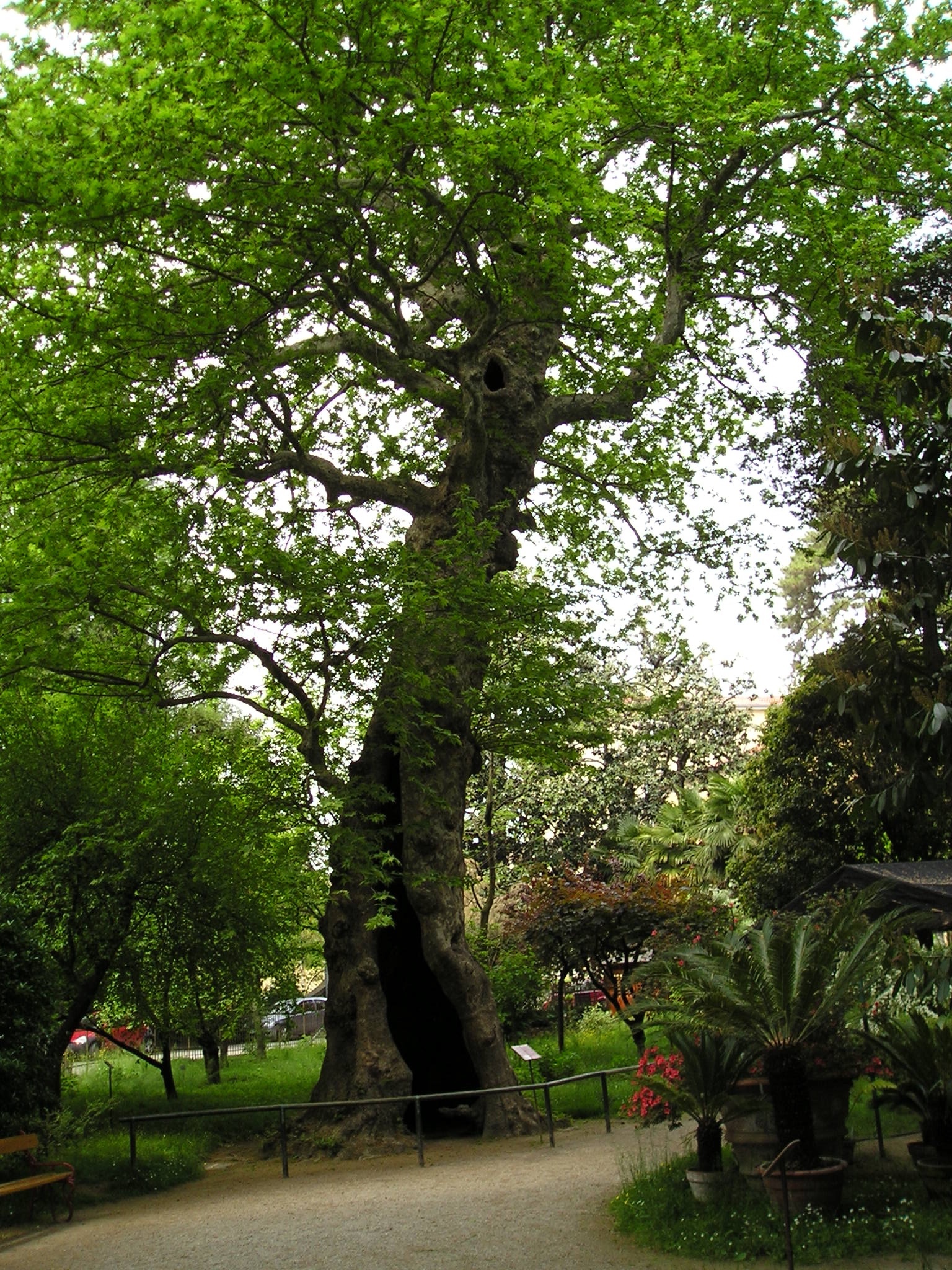
In this gorgeous garden there are over 95 London Plane trees and they are, without doubt, some of the, if not THE, most beautiful trees in the whole of it’s 39 acres.
The London plane is a large deciduous tree growing 20–30 m (66–98 ft), exceptionally over 40 m (131 ft) tall, with a trunk up to 3 m (10 ft) or more in circumference. The bark is usually pale grey-green, smooth and exfoliating – like “Dick’s Plane”, or buff-brown and not exfoliating – like “Victoria” and “Albert”. The leaves are thick and stiff-textured and superficially maple-like in appearance. In spring the young leaves are coated with minute, fine, stiff hairs, but these wear off and by late summer the leaves are hairless or nearly so. The flowers are borne in one to three (most often two) dense spherical inflorescences on a pendulous stem, with male and female flowers on separate stems. The fruit matures in about 6 months, to 2–3 cm diameter, and comprises a dense spherical cluster of fruits with numerous stiff hairs which aid wind dispersal; the cluster breaks up slowly over the winter to release the numerous 2–3 mm seeds. It is these seeds that cause our team the biggest problems with hay fever like symptoms. This species of tree is one of the most efficient in removing small particulate pollutants in urban areas.
The London plane is very tolerant of atmospheric pollution and root compaction, and for this reason it is a popular urban roadside tree. It was planted extensively in Victorian times to weather the pollution of London. It is now extensively cultivated in most temperate latitudes as an ornamental and parkland tree, and is a commonly planted tree in cities throughout the temperate regions of the world, in London and many other cities.
The tree is fairly wind-resistant. However, it has a number of problems in urban use, most notably the short, stiff hairs shed by the young leaves and the dispersing seeds. These are an irritant if breathed in, and can exacerbate breathing difficulties for people with asthma. On top of this, the large leaves can create a disposal problem in cities, as they are tough and sometimes can take more than a year to break down if they remain whole. Drains are often clogged with fallen leaves and cause a lot of flooding.
The London plane is one of 50 Great British Trees that the Tree Council selected in 2002 in honour of Queen Elizabeth II’s Golden Jubilee. The list specifically mentions Britain’s first London plane being in the city of Ely, Cambridgeshire.
The Plane Tree has also inspired many artists.
In Handel’s opera Serse (Xerxes), the opening aria “Ombra mai fu” is sung by the main character, Xerxes I of Persia. He is admiring the shade of a Plane tree. It is one of Handel’s most beautiful arias and is usually sung by a counter tenor……as in this clip.
There is also a short poem about a London Plane by an anonymous 19th Century poet that actually sums up the Plane tree perfectly.
Green grows the plane tree in the square
‘Though other trees are brown.
For ‘though they pine for country air
The Plane tree loves the town.
I hope you have enjoyed this article. If you did please say so in the comments.
 Read and Listen with Keith
I love trees too, all of them, and I always think plane trees are quintessential London.
LikeLiked by 1 person
I love trees too. Believe it or not, the sycamore is the most common species of tree in London, beating what is often wrongly considered the most prevalent, the London plane. Numbering circa 656,000, the species make up 7.79% of the capital’s overall tree population. Next comes English Oak. London’s oaks are currently storing the greatest amount of carbon of all the capital’s trees – approximately 481,795 tonnes. This is as of 2019.
LikeLiked by 1 person
Thank you (or should that be Yew?) for that info. I will store it away in the filing system for future use.
Interesting data on the carbon storage of the Oak. It goes to show how important trees are to the population and the world as a whole.
LikeLike